What Is TPE Sex Doll Material
The soft, meltable, oil-filled rubber behind nearly every affordable full-size doll.
A TPE doll is a soft rubber that heat can melt and re-melt, kept supple by mineral oil worked into it. A factory reaches for it because it pours cheap and feels close to skin.
Which TPE, first
TPE is the name of a whole family of plastics. The letters cover a wide shelf, from phone-case TPU to the TPV in an engine gasket. The doll version is one specific member of it: SEBS, styrene-ethylene-butylene-styrene, softened heavily with white mineral oil. The styrene blocks in that name give the raw rubber a baseline firmness before any oil goes in. The oil then softens the blend down from there. A listing that stops at the three letters names that family and no more. The recipe sits one level down, in the oil grade and the mixing time. That level sets whether a doll lasts the better part of a decade or goes tacky within a year.
One cheaper cousin still sits at the bottom of the market. SBS drops the saturated middle block that keeps SEBS stable. A doll poured from a heavy SBS blend yellows and hardens under light and heat, often inside its first year. SBS costs the factory less to buy. That saving is the only reason it survives at all. SEBS itself dates to 1972, when Shell hydrogenated the SBS it had been selling as Kraton since 1966. The safer factories pour SEBS and name it plainly when a buyer asks.
Two flattering labels ride on the confusion. Medical grade and food grade both borrow from a real fact: raw SEBS does turn up in medical tubing and food-contact plastic. The doll blend is a cut-down version of that base, mixed with oil, pigment, and at the cheap end reground scrap whose polymer chains have already snapped short. Recycled feedstock gives itself away in the hand: a chemical smell out of the box, a tear under light stress, a tacky film within months. The figure that would settle it, a batch report on the finished blend covering hardness and any recycled content, is one few sellers keep on hand.
Two more phrases circle the same base. Imported TPE and Japanese TPE both point at where the pellet was made. That origin says little about the finished doll, since raw SEBS is a global commodity a factory anywhere can buy. Soft TPE and standard TPE point at something realer, the oil load.
One more substitute sits a rung lower. TPR, thermoplastic rubber, is a loose umbrella a listing sometimes prints where TPE would go. At the cheap end it points to a soft SBS blend with none of SEBS’s backbone. On a doll the bare letters TPR carry even less meaning than TPE. An honest seller names the SEBS base and the oil load unprompted.
One number does ride with the honest listings: Shore hardness, on the 00 or A scale. It puts a figure on how soft a blend feels. A blend around Shore 00 sits in gel-insole territory, the softest doll flesh on the market. The same number climbs whenever a factory cuts the oil. A label of soft, medium or firm is that scale in plain words, priced in three steps. Those words shift between makers, so one factory’s soft rarely lines up with the next one’s. Plenty of budget listings skip the figure, since a soft-sounding adjective sells better than a number a careful buyer can hold them to.
Because it melts
Heat turns the blend fluid because the hard styrene blocks that pin it together soften near 95 to 100°C. Under that point those blocks hold the long rubber chains locked in a fixed shape. Past it they release. The whole mass then flows like a thick liquid until it cools and firms up once more. No chemical bond breaks or forms across that cycle.
A factory turns the reversibility straight into money. Pellets melt in a heated barrel near 180 to 200°C, pour into a doll mold set around a steel skeleton, cool within minutes into a finished doll. A part that comes out flawed goes back into the barrel for another pass, so the scrap bin stays near empty. SEBS stays stable through a long hot pour without scorching. The same molten pour lets a factory drop a softer gel into the chest or belly before it sets.
Two hidden parts ride inside that same pour. A skeleton of steel tube and articulated joints, often stainless or zinc-plated against rust, sits in the mold first, so the blend sets around a frame that bends into a pose and holds it. A full-size doll runs heavy on solid TPE, often past 25 to 35 kilograms, so many factories foam the blend or leave a hollow core through the torso to shed the weight. A hollowed or foamed cavity traps water more easily. A doll built that way asks for a longer, more patient dry after every wash.
The shape of a part decides how it gets poured. A large soft piece, a torso or a thigh, comes out of an open steel mold, cast or spun so the low-pressure blend fills every curve. A small firm piece such as a head takes higher-pressure injection for crisp edges. Run a hand down an inner arm and a faint line sometimes turns up, the trace of two mold halves meeting, sanded back by hand to almost nothing.
Years later that same reversibility reaches your kitchen table. A split closes under a heat gun, held back a little to keep the air near the softening point, as the cut faces melt and knit into each other, a home fix no silicone doll allows. A deep tear needs a filler strip of matching TPE worked in while both sides run molten. A patch across a high-flex spot, an armpit or an inner thigh, can open again under hard use. Worked patiently, a shallow seam vanishes under a searching finger.
The same soft styrene sets a hard ceiling on heat. Because the anchors soften so low, a doll left against a radiator or shut in a summer car, once it climbs past 40°C or so, sags out of true and stays sagged. Bath water runs warm, never hot. A heating rod that brings a doll to skin temperature is safe, since body warmth sits far below the softening point. Only sustained heat above that line deforms the material. The same ceiling bans a hot hair dryer near the face and a scalding soak meant to sanitize, both of which reach for temperatures the styrene cannot hold.
Cold pushes the rubber into stiff and brittle. A doll stored somewhere cold turns noticeably firmer, plain to feel after a winter delivery. It needs to reach room temperature before any joint gets bent. Forced cold to its limit, a joint splits at the crease. An unheated garage in January treats a stored doll about as roughly as an August attic does.
Because it is oiled rubber

Rubber springs: it stretches under a load, then pulls back to shape once the load lifts. Inside SEBS the long chains take the stretch. A test strip stretches to 4 to 9 times its own length before it breaks, written on the sheets as 400 to 900% elongation. The styrene blocks pull the shape home. Owners handling TPE after silicone name that return first, the way a thigh keeps moving for a moment once a hand lifts away. Real tissue answers pressure the same way.
The oil is what pulls the rubber soft enough to pass for skin. It is a mineral oil, a light petroleum distillate from the same broad family as baby oil and food-grade white oil. It works in between the chains and lets them slide past one another under light pressure. A heavier oil load gives a softer, jigglier doll, down into the low Shore 00 range. In gel grades the oil passes 85% of the blend by weight and hardness drops below Shore 00-25. What a hand takes for flesh is a surface that yields easily under a fingertip and comes back the instant the finger moves on.
Color goes into a doll in two places. The base skin tone is mixed straight into the blend, so it runs all the way through the material and a scratch turns up the same color underneath. The blush, the areola, the lip color go on afterward as a thin painted layer. That painted layer is the one that can rub onto tight pale clothing or fade over years. Owners touch it back up with the maker’s matching paint kit when it wears. Dark and saturated fabric is the real risk to it, since the dye works into porous TPE and stains from the outside in, past the reach of any wash.
The oil creeps to the surface over weeks as a faint film, the film owners dust down with cornstarch. It also leaves the blend slightly porous, so the skin takes in a little water and takes its time drying after a wash. Both are why powder and a careful dry belong in the routine from day one.
Body fluids and wash water both soak a little way into a surface that stays porous. Any cavity used in play gets rinsed, dried and powdered on a schedule. Mild soap is the rule for it, since a harsh detergent pulls oil out of the surface along with the grime. A quick wipe leaves too much behind. A removable insert, the kind many TPE dolls ship with, exists for exactly this reason, since a part that comes out dries in full and cleans in a way a fixed channel cannot.
One early feeling gets mistaken for the oil. A brand-new doll can arrive slick from a mold-release agent coated on at the factory to free it from the mold. No oil has surfaced yet. The first proper wash strips the release agent off. Taking that day-one slickness for oil bleed is a common false alarm of the first week. Smell is a second one, the manufacturing note of oil and warm plastic that fades over the first weeks and means nothing about safety. Airing the doll out in a ventilated spot over its first days clears that note faster.
The grade of that oil runs as a quiet quality line under the price, one a listing rarely prints. A doll that reeks and greases up in its first weeks is usually carrying a cheap industrial oil, the kind that holds its own smell and migrates to the surface fast. The same oil chemistry is why porous TPE wants no alcohol or acetone near it, since those strip the plasticizer out and leave a dry, stiff scar where they land.
As the oil leaves
The plasticizer, a large share of the blend by weight, migrates out of the rubber across years, the day-one softening slowly running backward. As it goes, the skin firms up, loses its sheen, and starts to gather fine tears where the doll flexes hardest, the armpits, the inner thighs, the crotch seam. Ultraviolet light speeds the whole process, drying, yellowing and chalking the surface over months of direct sun.
Storage decides how evenly a doll ages, as much as the blend does. A doll left folded in one loaded pose for months takes a permanent set. A joint held at the edge of its range grows a tear at the crease. Flat and supported, hips and shoulders carried, joints relaxed, out of direct sun, is the rule. A doll rested always on one side flattens and marks where the weight settles. Damp is the other risk to a stored doll. The steel skeleton inside can rust in a humid room across the years, so a dry space and a silica pack do real, unglamorous work. Two to five years is the working span makers commonly quote for TPE. Careful storage pushes a doll toward the top of that range. Neglect on any one front pulls it down fast.
Everyday care follows straight from the oiled-rubber fact. Warm water and a little mild soap cover almost all of it, since the porous surface keeps whatever it meets. A mild antibacterial rinse and a full dry keep mildew out of the pores. When a shallow tear opens, a dab of the maker’s own TPE glue, a solvent that briefly re-melts the surface, welds the two cut faces together. It is the kitchen-table version of the melt the factory used.
A super-soft blend carries extra oil, which is what wins the unboxing clip. That same extra oil is what bleeds out, firms up and cracks earliest down the line.
Silicone is the opposite build
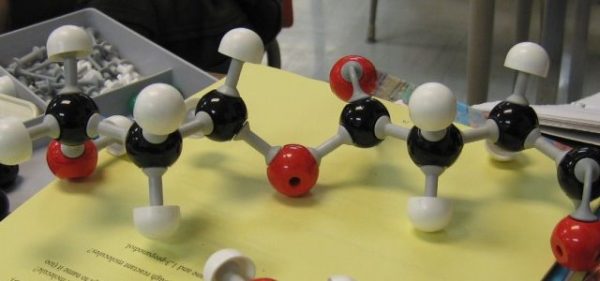
Silicone meets the same design brief through silicon and oxygen, an inorganic backbone in place of the carbon and hydrogen that make up TPE. It cures a single time, cross-linking into one permanent network that no heat will melt again. Nothing on a finished silicone doll is meant to be reworked with heat at a kitchen table.
A thermoset like silicone locks for good in one chemical reaction, with no melting phase left in it anywhere. The grade a doll buyer pays up for is platinum-cure silicone, the cleaner and more stable of the two cure systems. Platinum and tin name the metal catalyst that drives each cure. The older tin-cure kind draws moisture from the air to set and can keep reacting and off-gassing for months after it leaves the mold, which is why doll work almost always specifies platinum. Platinum stock costs the factory more per kilo on its own, part of what a silicone doll’s higher price pays for.
Past 100°C it still keeps its shape, well above anything a room or a heating rod reaches. It seals close to non-porous, so it cleans with a wipe, free of the stains and mildew that porous material has to be dried against. Its firmer surface holds fine mold detail, a pore or a painted freckle, for longer. It also costs more, opening near $2,000 for a full-size doll, roughly two to three times what a comparable meltable one asks. A silicone doll still needs washing and gentle handling all the same.
Silicone also runs denser, near 1.1 to 1.2 grams per cc, so a full-size silicone doll carries real weight in the arms during any move. Both materials start cold to the touch, since neither one carries heat well, which is why a heating rod or a warm blanket goes to work before contact either way.
A hybrid build splits the difference down the neck, joined at the standard connector many dolls already use for head swaps. A silicone head carries the sharp facial detail a camera picks up, set over a TPE build that keeps the soft feel and the lower cost below the collarbone. Its price lands between the two.

About the author
Thaddeus Montgomery Kingswell
Senior R&D Engineer with over 12 years of experience in the realistic adult doll industry, specializing in platinum-cure silicone formulation and lifelike skin texture engineering. Currently leading the development and validation of the company's next-generation full-silicone doll platform, responsible for material safety assessment, softness calibration, and long-term durability analysis in pre-production testing. Brings extensive hands-on experience in silicone pigmentation and layering techniques, articulated skeleton joint tuning, and full-body structural reliability testing.
View all posts by Thaddeus Montgomery Kingswell →